

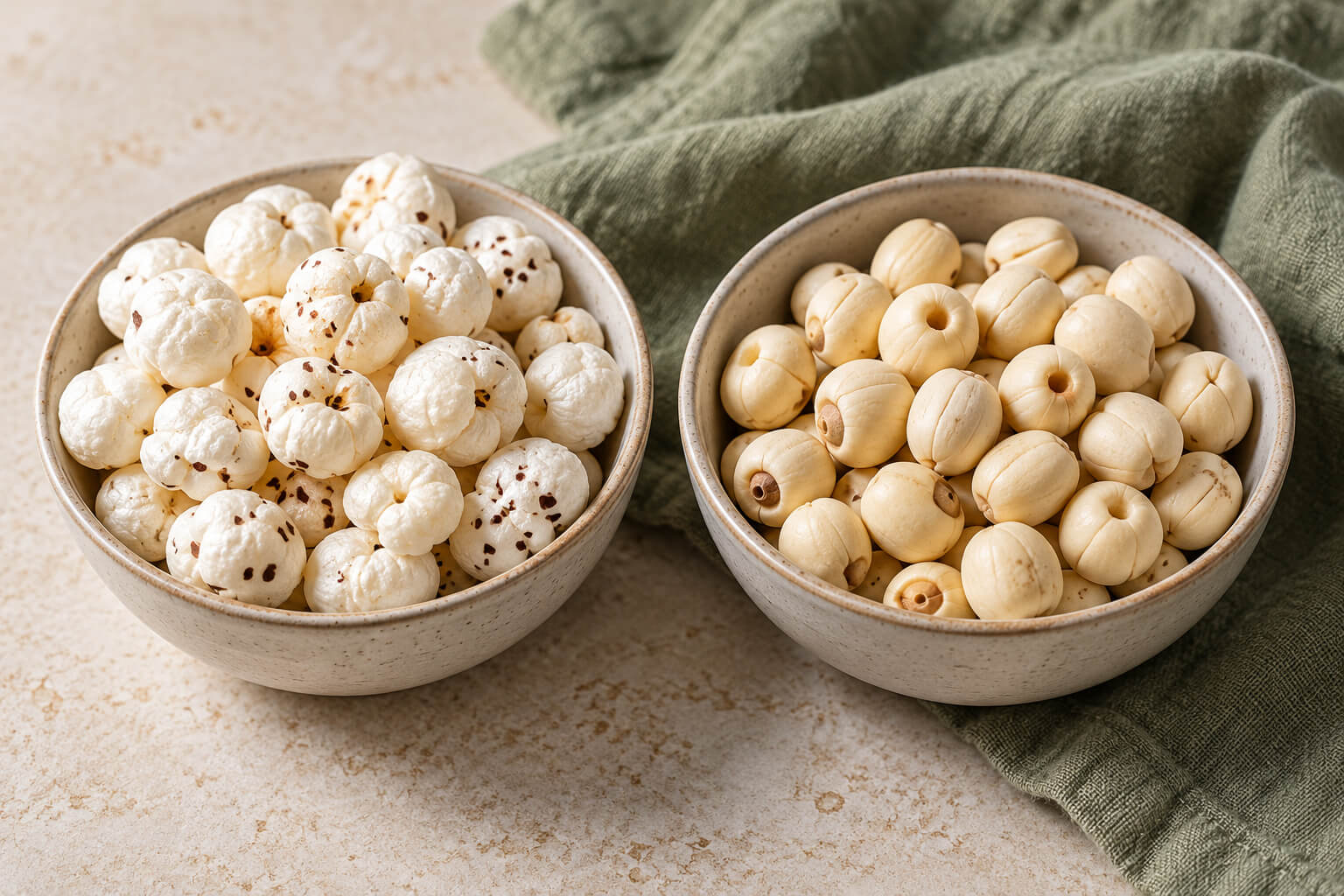
Makhana and true lotus seeds are different ingredients. Makhana comes from Euryale ferox, a water-lily species, while true lotus seeds come from Nelumbo nucifera. The confusion starts when shops use “lotus seeds” as a loose name for the white, popped snack also called fox nuts or phool makhana.
If you are comparing makhana vs lotus seeds before ordering in the UK, check the plant name and the product’s form together. A familiar name on the front of a packet is not always enough to tell you what will arrive or how to prepare it.
This guide explains the distinction, the questions worth asking a seller, and how to compare products without mixing up their nutritional information. The makhana vs lotus seeds question is best answered by checking both the species and the product form.
Makhana vs lotus seeds: the key difference
The ICAR National Research Centre for Makhana identifies makhana as the edible seed of Euryale ferox and records fox nut and gorgon nut as common names. Kew’s plant database lists Euryale ferox and Nelumbo nucifera as separate accepted species.
| Check | Makhana | True lotus seeds |
|---|---|---|
| Botanical name | Euryale ferox | Nelumbo nucifera |
| Names you may encounter | Phool makhana, fox nuts, gorgon nuts; sometimes loosely labelled lotus seeds | Lotus seeds; confirm the botanical name if unclear |
| Important product detail | Check whether popped, plain, seasoned or supplied in another form | Check whether dried, fresh, cooked or otherwise prepared |
| Best buying question | “Is this popped Euryale ferox?” | “Is this Nelumbo nucifera, and what preparation does it need?” |
The species tells you which plant the food comes from. The preparation tells you what to do with it. You need both pieces of information: a dried ingredient and a prepared snack are not interchangeable simply because their packets share an English name.
Makhana vs lotus seeds: why do sellers mix up the names?
Retail names can carry over between languages and markets. During our review, UK listings used “phool makhana”, “fox nuts” and “lotus seeds” for the same advertised snack. This explains why searches can return apparently contradictory descriptions.
The distinction also appears in the 2025 makhana export report hosted by APEDA, which discusses the confusion around common English names. Botanical identification is more dependable than treating every informal name as a precise translation.
That does not mean every seller using the phrase “lotus seeds” is intentionally misleading customers. It does mean you should ask for clarification if the recipe or ingredient you want depends on the actual species.
What can a product photograph tell you?
A photograph can help you distinguish a packet of light, popped pieces from a packet of dense, unpopped kernels. It cannot verify botanical identity, current ingredients or the contents of a particular batch.
Use the photograph as a first check, then read the description and label. If they disagree, ask the seller rather than choosing whichever version sounds more appealing.
Makhana vs lotus seeds: 7 buying mistakes to avoid
The seven checks below help UK shoppers avoid common mistakes when comparing makhana vs lotus seeds online. Each check answers a different question about identity, preparation or value.
- Start with the intended use. Are you buying a snack to eat as directed, a plain ingredient for a recipe, or an ingredient within a blend? These are different purchases.
- Find the botanical name. Look for Euryale ferox or Nelumbo nucifera. If it is absent, ask which species the supplier identifies.
- Confirm the form. “Plain” does not necessarily mean raw, and “roasted” does not tell you everything about preparation. Check the actual instructions.
- Read the complete ingredient list. Seasoning, oils and sweet coatings may change the product you are comparing.
- Check allergen information. Read the current packet, including any cross-contact warning. Do not infer suitability from the word “nut” or from a photograph.
- Compare net weight and delivered price. A large-looking bag of an airy snack can contain relatively little food by weight.
- Check storage and date information. Follow the manufacturer’s directions, including instructions that apply after opening.
A useful message to a retailer is: “Could you confirm the botanical name, whether the seeds are popped or dried, and send the current ingredient and preparation labels?” That asks for evidence without requiring you to become a botanist.
Makhana vs lotus seeds: compare nutrition and value fairly
Do not copy the nutritional figures for dried lotus seeds into a comparison of popped makhana. A makhana vs lotus seeds nutrition comparison needs the correct species and product form. Even when two foods have similar common names, they are not automatically the same item in a nutrition database.
Use the label for the exact product wherever possible. Compare matching units and states: per 100g with per 100g, or the portion you expect to eat with the same weighed portion of the alternative. Include added ingredients rather than comparing a seasoned snack with an unrelated plain-food entry.
A worked example using imaginary labels
Suppose a packet states 10g of protein per 100g. A 25g portion would provide 2.5g of protein: 10 × 25 ÷ 100. Those numbers are an illustration of the calculation, not a nutrition claim about makhana, lotus seeds or Aura Blend.
Apply the same approach to value. A hypothetical 100g bag costing £3 is £3 per 100g; a 250g bag costing £6 is £2.40 per 100g before delivery. That makes the second bag cheaper by weight, but does not make it the better choice if it is the wrong ingredient or more than you need.
What if makhana is one ingredient in a blend?
Aura Blend’s ingredient overview lists fox nuts, also called makhana, among its ingredients. This article explains that ingredient name; it does not establish the finished formula’s nutrient content or health effects.
A blended product must be assessed as a whole. Knowing that one ingredient appears in the recipe does not tell you how much is present in a serving. It also does not establish that the blend provides the same amount of protein, fibre or other nutrients as a serving of the ingredient on its own.
If an ingredient name, quantity or suitability detail is unclear, use Aura Blend’s product and ingredient enquiry contact to request the current label before buying.
Common questions
Are fox nuts and makhana the same thing?
Fox nuts is a common name for makhana. For a precise identification, check for Euryale ferox rather than relying on the common name alone.
Can I replace lotus seeds with makhana in a recipe?
Do not assume a direct substitution. First establish what the recipe means by lotus seeds and whether it expects popped pieces, dried kernels or another prepared form. Follow instructions written for the ingredient you actually have.
Does the botanical difference make one healthier?
In a makhana vs lotus seeds comparison, the botanical name identifies the plant; it does not rank a finished food. A useful comparison needs the actual ingredients, preparation, portion and nutritional label. Avoid choosing a product solely because its marketing uses words such as “superfood”.
What if the listing does not identify the plant?
Ask the supplier for clarification. If you need a specific ingredient and the seller cannot confirm it, choose a product with clearer information rather than guessing.
Choose by plant name, form and purpose
For makhana, look for Euryale ferox. For true lotus seeds, look for Nelumbo nucifera. Then confirm the preparation, ingredients and directions. If you are still weighing up makhana vs lotus seeds, choose the ingredient that matches your recipe or intended use, not simply the most familiar retail name.
