

What is javitri (mace), exactly?
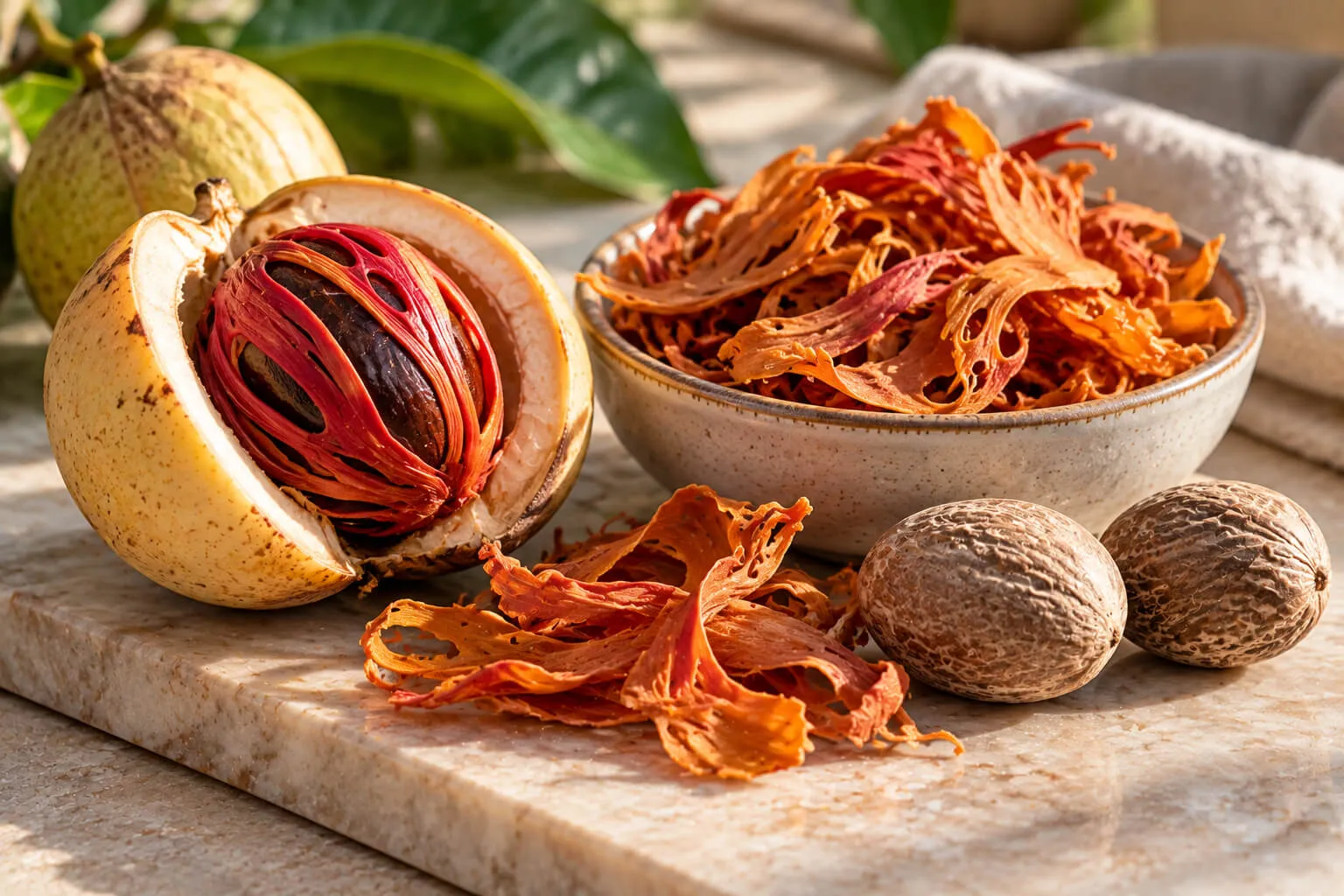
To understand what is javitri, picture a nutmeg fruit cut open. Inside sits a seed wrapped in a red, branching, mesh-like layer. When that layer is carefully separated and dried, it becomes mace. The seed kernel is processed separately as nutmeg. They have a shared botanical origin, yet they are sold and used as two distinct spices.
Royal Botanic Gardens, Kew, records “javitri” as a common name associated with Myristica fragrans and identifies the plant part in relevant references as the dried aril. The Indian Institute of Spices Research similarly describes mace and nutmeg as twin spices obtained from one fruit.
Fresh mace looks strikingly red; once dried it often becomes orange, tan or reddish brown. The dried pieces have an intricate lacy appearance rather than the round, firm shape of a whole nutmeg seed. This makes it relatively easy to recognise in a clear packet.
Are javitri, javatri and mace the same?
Different transliterations can appear on English-language packaging, including javitri and javatri. For ordinary culinary shopping, these names normally refer to mace. The more important check is the spice’s identity and form, not which spelling a retailer uses. In a UK supermarket, “mace” is usually the quickest search term.
Is javitri the same as nutmeg?
No. They come from the same tree and fruit, but not from the same part. Nutmeg is the seed kernel; mace is the aril around the seed. Describing them as the same ingredient would hide a useful distinction for shopping, recipe substitutions and flavour.
Javitri vs nutmeg: what changes in the kitchen?
Both spices have a warm, aromatic character. Cooks often describe mace as more delicate or lighter in some dishes, while nutmeg can seem fuller and more assertive. These are useful tasting descriptions, not laboratory measurements: variety, freshness and how much spice you add can change the impression.
| Check | Javitri / mace | Nutmeg / jaiphal |
|---|---|---|
| Plant part | Dried aril surrounding the seed | Seed kernel |
| Appearance | Thin, branching, dried blades or ground spice | Hard, oval seed or ground powder |
| Typical use | Infusing sauces, rice dishes, broths and spice blends | Grated or ground into savoury and sweet recipes |
| In a UK shop | Look for mace blades, whole mace or ground mace | Look for whole nutmeg or ground nutmeg |
| Substitution | Sometimes possible, but flavour and strength may differ | Sometimes possible, but start cautiously and taste |
A recipe that specifically asks for whole mace blades may be designed so the cook can infuse and later remove them. A spoonful of ground nutmeg would behave differently. For that reason, a substitution is not always a one-for-one swap.
7 essential facts about javitri for UK home cooks
1. Javitri comes from the nutmeg fruit, but it is not the seed
This is the most important answer to what is javitri. The spice comes from the reddish aril, whereas nutmeg comes from the kernel. If a listing simply says “nutmeg flower”, verify that the product pictured and described is mace rather than an unrelated flower or powdered spice blend.
2. The whole spice is usually sold as lacy blades
Whole mace has a distinctive net-like structure that breaks into curved fragments as it dries. In some UK listings those pieces are called blades. You can gently crush a small piece before cooking to release more aroma, depending on the recipe. Avoid treating the appearance alone as proof of origin or quality.
3. Ground mace is convenient but loses aroma over time
As with many ground spices, a larger exposed surface area means aromas can fade during storage. Buying whole blades can be useful if you only cook with mace occasionally. Ground mace makes more sense when a recipe needs an evenly dispersed flavour, such as in a sauce or baking mixture.
4. It can flavour both savoury and sweet food
Javitri is not limited to one cuisine. In South Asian cooking, it can appear in biryani, korma, pulao and aromatic spice mixtures. In some European kitchens, mace also appears in sauces, soups, meat dishes, desserts or baking. Its warm character can complement dairy, rice and gently spiced foods.
5. A small amount can go a long way
Because mace is aromatic, recipes often call for modest culinary quantities. Follow a trusted recipe rather than assuming more will taste better. If you are new to the spice, begin with the specified amount, taste when appropriate and make adjustments on later attempts.
6. You can sometimes substitute nutmeg, but not perfectly
If a recipe calls for ground mace and you only have nutmeg, a cautious substitution may be workable. The resulting flavour may be noticeably different. Substitution is less suitable when a recipe expects a whole blade that will be removed before serving. The preparation method matters as much as the name.
7. Culinary use is not evidence of a medical benefit
Spices can have traditional reputations extending well beyond cooking. However, what is javitri in a recipe is a different question from whether large quantities improve sleep, digestion, hormones or energy. The evidence for a particular medical effect should not be inferred from a familiar culinary use.

How to use javitri in everyday cooking
One practical way to use whole mace is to add a small piece to a simmering liquid, rice or sauce, following a recipe that calls for it. Remove the whole piece when instructed, in the same way you might remove a bay leaf or another whole spice.
Rice dishes and savoury recipes
Mace can be combined with other aromatic spices in pulao, biryani or a gently spiced broth. Used alongside cardamom, cloves and cinnamon, it adds another aromatic layer rather than functioning as the only flavour. If your dish already contains a strong garam masala, check the ingredients before adding more mace: some mixes may already include it.
Sauces, soups and baking
Ground mace can be easier to use when you want an even flavour throughout a white sauce, creamy soup or baked recipe. The exact quantity should come from the recipe. When switching from whole blades to ground mace, do not assume the same volume will produce the same strength.
Whole blades versus powder
Whole blades are useful for infusions, slower cooking and occasional use. Ground mace is convenient for quick preparation and mixtures where visible pieces would be unwelcome. Neither form is automatically superior: the right choice depends on your recipe, storage habits and how often you cook.
When someone asks what is javitri used for, the most reliable starting point is a specific dish rather than a broad claim about wellness. That keeps the choice grounded in flavour and cooking method.
What is javitri on a UK spice label? A practical example
Imagine you are choosing between a small packet of whole orange mace blades and a larger jar of ground mace. Both might be labelled javitri, but they are not equally convenient for every recipe. Start with what you actually plan to cook. A whole blade may suit a liquid dish that will be simmered and strained; a ground spice disperses more quickly and cannot be removed as easily once mixed in.
Next, read the net weight and price. A large jar is not necessarily better value if you only use the spice occasionally and the aroma fades before you finish it. If a recipe calls for “one blade”, do not assume a teaspoon of ground mace is the same amount. The size of individual blades varies, and the finished flavour also depends on freshness and cooking time.
For an everyday UK shopping decision, compare the back labels. Look for the ingredient name, packed quantity, best-before date, storage advice and details of the responsible seller. If a blend lists mace alongside several other spices, its flavour will depend on the whole recipe. A photo of a bright orange blade is helpful for recognition, but the current packet is the reliable source for what the product contains.
If you are new to the flavour, start by following a tested recipe that calls for mace rather than inventing a large substitution. Whole pieces can often be taken out before serving. A little seasoning can be adjusted in your next batch, but an overpowering amount is difficult to undo. Avoid treating advice about culinary flavour as guidance to take large quantities for health purposes.
The answer to what is javitri is simple botanically: the dried aril around the nutmeg seed. Understanding the label is what makes that fact useful in your kitchen. You can recognise the different product forms, avoid confusing ground mace with ground nutmeg and purchase only what your recipes are likely to need.
Finally, keep dried spices sealed in a dry cupboard away from light, heat and moisture. If a packet becomes damp, mouldy or develops an off smell, do not try to rescue it with more cooking. Using fresh, correctly stored ingredients is more useful than chasing promotional claims about the spice.
What UK shoppers should check before buying mace
For people buying in Britain, understanding what is javitri makes a shop search simpler. When a friend asks “what is javitri?”, you can explain that it is the aril of the nutmeg fruit, normally sold in the UK as mace. Try searching both “javitri” and “mace”. South Asian grocers may display one term while specialist spice shops or mainstream retailers use the other.
- Confirm the product identity. Look for mace or the botanical source, Myristica fragrans, in the description where provided.
- Check the form. Whole mace blades and ground mace work differently in a recipe.
- Read the ingredient list. Make sure a supposed single spice does not contain an unexpected mixture, colour or added ingredients.
- Check the weight. Compare price per 10g or 100g rather than comparing differently sized jars by their shelf price.
- Review label and seller details. Choose packaging with clear responsible-business, storage and date information.
- Use a reputable source. Ask questions if the picture and description do not agree or if a product seems unusually cheap.
- Buy for your realistic use. A small fresh quantity is often more practical than a large bag you may keep for years.
For more help reading ingredients, directions and pack information, our UK label-reading guide explains a careful step-by-step approach. Although it focuses on supplements, the general habit of checking the actual product description remains useful when shopping for ingredients.
How should mace be stored?
Keep the packet or jar tightly closed, dry and away from heat and direct sunlight, following the manufacturer’s instructions. Store it away from steam generated by cooking; repeatedly exposing ground spice to moisture is a poor idea. Label the jar if transferring it to another container, and do not ignore damage, unusual odours or signs of contamination.
Many recipes depend on aroma. If mace has lost most of its scent, it may no longer offer the flavour you expected even if the date is not the only consideration. A best-before date concerns quality rather than being identical to a use-by safety date; always follow the current packaging and food safety advice.
Is javitri safe? Separate seasoning from concentrated products
Ordinary use as a culinary spice and taking large or concentrated amounts are not the same. Nutmeg and mace contain aromatic compounds, and high-dose nutmeg exposure is associated with harmful effects. Do not use mace or nutmeg as a self-prescribed treatment, or assume that a concentrated oil or supplement is equivalent to a pinch used in food.
Essential oils are especially different from ordinary powdered or whole spice. They are concentrated products, and tasting or swallowing them without appropriate professional guidance is not a sensible substitution for culinary seasoning.
Pregnant or breastfeeding people, anyone taking prescribed medication and people with relevant health conditions should seek advice from an appropriate healthcare professional before using concentrated herbal or spice supplements. Normal food recipes do not establish the safety of medicinal dosing.
A spice may appear on a wellness-product ingredient list, but the name alone does not establish a benefit or a safe amount. Aura Blend’s ingredients overview includes javitri, also known as mace. That statement identifies an ingredient and does not establish how much is in an individual serving or that a finished formula produces a particular effect.
Does javitri improve digestion or energy?
Claims about digestion, sleep or stamina need specific, reliable evidence; the traditional use of a spice does not make a health claim proven. Avoid products promising cures or dramatic hormonal effects from an ingredient name alone. Ask for the full label through Aura Blend’s contact page if a claimed ingredient amount or preparation is unclear.
Frequently asked questions about javitri and mace
What is javitri called in English?
Javitri is commonly called mace. Whole dried pieces may be labelled mace blades; the powdered form is ground mace.
What is javitri made from?
It is the dried aril, or net-like covering, around the seed of Myristica fragrans. Nutmeg comes from the seed kernel of that same plant.
Is javitri stronger than nutmeg?
Perceived intensity depends on the product, age, quantity and recipe. Both are aromatic, but they do not taste exactly the same. Follow a recipe when using either for the first time.
Can I use nutmeg instead of mace?
Sometimes, particularly in a mixed dish, but it is not a perfect replacement. Start with a cautious culinary amount and expect a different flavour. A whole mace blade intended for infusion is not interchangeable with a spoonful of nutmeg powder.
Why is javitri expensive in some UK shops?
Retail price can reflect import costs, packaging size, brand, grade and whether the spice is sold as whole blades or powder. Compare the weight and supplier information before deciding whether a particular pack offers good value.
Is javitri a flower?
Not botanically. The lace-like pieces may look flower-shaped, but mace is the aril around the nutmeg seed, not a dried flower.
Can I add javitri to tea every day?
Use only amounts appropriate to a food recipe and do not treat routine consumption as a medical recommendation. If you are considering concentrated or therapeutic use, seek qualified healthcare advice instead.
Final verdict: recognise the spice before choosing it
What is javitri? It is mace: the aromatic dried covering around a nutmeg seed. Once you know that, the key shopping decisions become straightforward. Choose whole blades when a recipe needs a removable infusion, ground mace when you want even distribution, and check the packet rather than relying on a familiar name.
The answer to what is javitri is about a distinct spice and its part of the fruit, not a promised medical effect. Javitri has a useful place in many kitchens because of its distinctive flavour. Enjoy it as a spice, keep amounts appropriate to cooking, and treat medicinal claims as separate questions that require real evidence.
